The Truth and Dignity Commission proposed within the framework of protecting political memory after the Tunisian revolution that Ayoub El Jawadi, a theater artist specializing in “Forum Theater,” and Saham Aqeel, a playwright, conduct two workshops focused on the memory of the children of political prisoners from various political currents who experienced oppression, imprisonment, and intimidation under the authoritarian regime before the revolution.
The children of activists are living through an important phase of their family lives characterized by repression, imprisonment, and intimidation.
The Forum Theater workshop with Ayoub El Jawadi began with specific stages of complete communication with the writing workshop in order to understand the perspectives and visions of the participants. The aim was to explore theatrical approaches to uncover the accumulated experiences of the children of political actors during the oppressive era and how to articulate them for the Tunisian memory.
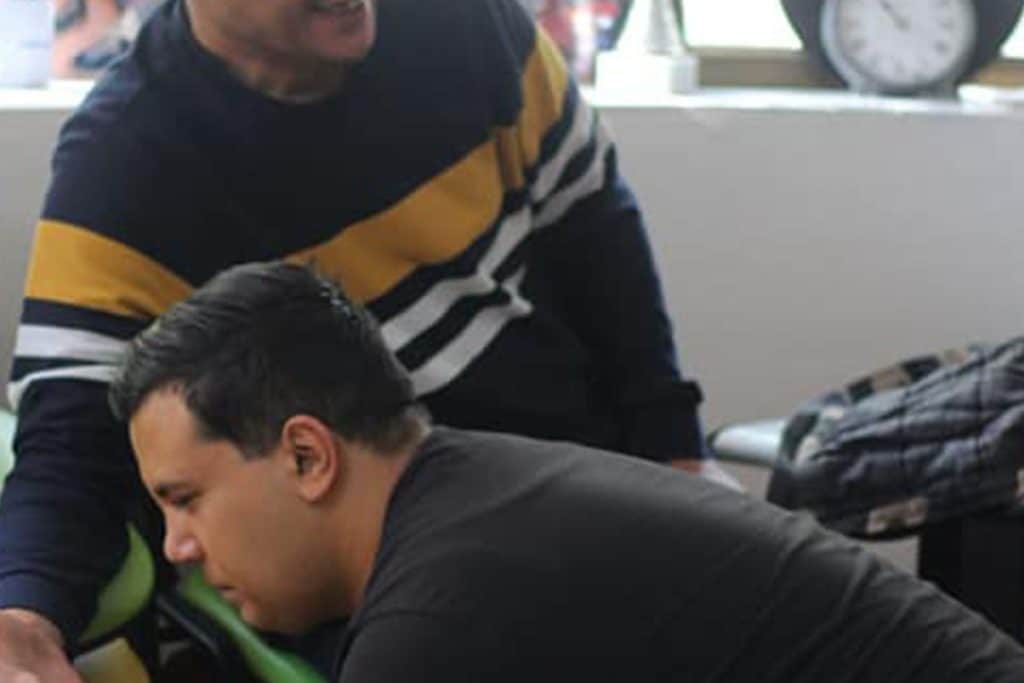
The first stage focused on familiarizing the group with each other through creating a space where they could generate energy among themselves. Different theatrical exercises were employed with the main objectives of:
– Enhancing the group’s ability to communicate within a theatrical space.
– Enabling the group to understand the proposed idea and work on it without psychological or ideological obstacles.
– Attempting to build interactive dialogue within the group through exercises facilitated by Ayoub El Jawadi, where members would listen to the story of one individual and then extend the narrative to the rest of the group as if it were their own story.
– Transitioning to constructing a collective myth and embodying it through an element within the group, so that it becomes the myth of the entire group.
– Establishing a sense of energetic belonging within the group, with the theatrical game and agreement serving as its foundation.
The first introduction.
The energy among the group members varied due to their inherent differences, but their age factor brought them together as most of them were between the ages of twenty and twenty-five. Communication between them started within the circle formed by Ayoub El Jawadi, the facilitator.
The group began working together during the Qurbah National Amateur Theater Festival in the summer of 2016. They continued with theatrical performances accompanied by discussions, workshops, and seminars.
The theatrical experiences of the group varied, with some of them pursuing a theatrical path in amateur theater. This diversity allowed for coordination and communication in understanding the theatrical game.
In the Forum Theater workshop, the focus was on the group’s ability to interact with each other, despite the initial disparities. These disparities were natural obstacles, but they were overcome through the facilitator’s encouragement to develop communication skills, starting from energy exchange and eventually reaching the energy of expressing a story or a personal experience within the group. This story would then be adopted by the entire group, making it a collective myth that embraced different individual positions.
Through this stage, the group began to get to know each other by sharing stories and observing the different reactions to them.
Within the group, there were three ideological differences that characterized the families of the children of political actors:
S.M.’s parents belonged to the far left and they experienced imprisonment, secrecy, and prohibited political activities.
A.M.’s parents were from the far-right religious ideology. Her father was subjected to torture, and she herself faced the repercussions and imprisonment. She had a complete aversion to her paternal grandmother because she was the one who reported her father to the police, resulting in his arrest and subsequent release after the 2011 revolution.
N.H. was the son of a police officer who tortured protesters in the police station in Gafsa during the demonstrations in Tunisia in 2010-2011. However, he completely disassociated himself from his father’s actions. He joined the ranks of the revolution and actively participated in the anti-oppression protests during the same period. He was also involved in amateur theater activism.
The rest of the group members experienced different stages and moments of the revolution, which led to their political and activist awareness through their various experiences in the theater.
Between the forum workshop and the writing workshop…
The daily joint presence between the two workshops represents the formulation of a general plan for the presentation. The main planning involves the working methodology followed by the facilitator Ayoub Al-Jawadi, with a focus on detailing the work and dramaturgical structuring.
The contrast between the narrated situations and those proposed by the group allows for their theatrical crystallization through group collaboration. The lived experiences of the group members transform into a text that the group can stitch together with organic coordination, involving the role of the “Joker” as a driving force.
The mythical elements that will be worked on emerge, particularly in the restoration of the memories of the children who lived through their parents’ political experiences. The game concludes by blending the main theme of “reconciliation” with the present time, aiming to build a balanced political present.
Participant S.M presented their experience with their mother and father, narrating the story of the arrests they witnessed at their home, followed by the imprisonment of their father and their family’s isolation, as well as the period of unemployment resulting from their secret political activities.
Participant A.M struggled to present their major testimony and anger towards their grandmother. This was done by adopting the writing technique in the form of a letter to share their reading within the group.
The rest of the group attempted to distribute roles among themselves through the proposed events. The facilitator Ayoub Al-Jawadi aimed to change the positions to crystallize them and engage in internal discussions to build a critical interpretation of each person’s mythology.
Through this important stage, the group managed to overcome the emotional weight of each person’s story, transforming it into a dramatic narrative that could have a beginning, middle, and end.
The characteristics of the presentation became clear, including the format of the forum between the group and the Joker, and then during the authorship stage to present the show in a dialogue with the present audience.
The show began by presenting the political situations experienced by each individual, with the Joker, Ayoub Al-Jawadi, taking the lead in engaging the audience to build a dialectical movement with the other spectators who became interactive with what was happening before them.
This interaction between the presentation and the audience led to a meeting of different ideologies, intensifying communication at specific moments of the show.
The performance ….
The show adopts the issue of memory restoration as an intellectual and artistic challenge that can arise from the experience of citizens witnessed by the current generation. The aim is to build a structure where wounds meet their restoration in a possible construction that allows coexistence for everyone.
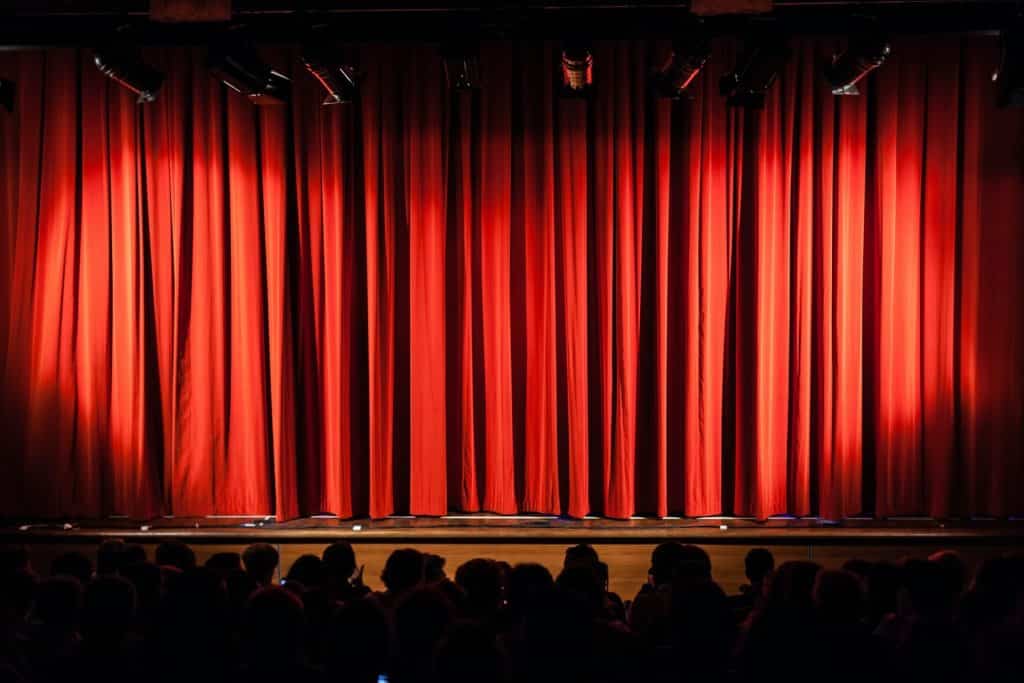
The show is presented in a theater hall and includes specific scenes that parallel political events, with the actor-players commenting on them until they are no longer lived. The timeline of events within the show starts from the mining basin to the events of spraying in Silyana, with a return to writing a political and theatrical memory for revolutionary figures of the Tunisian left, such as Fadhel Sassi and Nabil Barakati.
The experience of participant A.M is highlighted through the reading of her message to her grandmother and her reproach, while S.M presents their testimony about what they experienced with their parents.
Then, N.H comes forward to apologize to the audience and the group members on behalf of their father, who was involved in the torture of innocent people.
The Joker intervenes to animate and awaken the experiences, turning towards the audience.
A woman from the audience steps forward to reject N.H’s apology and directly accuse him on stage of refusing reconciliation, as she continues to suffer from deep anger over her father’s torture and the hardships of living under surveillance for more than twenty years.
Another woman, who is the mother of S.M and a former political prisoner from the left spectrum, intervenes to reject the first woman’s interference and tells her the necessity of forgetting grudges and not passing them on to the new generation who made the revolution and handed us the baton.
The Joker remains the main player in this interaction that emerges within the audience, which was the main goal created by the forum presentation to encourage discussion, critique, and interaction with a realistic and significant historical material from Tunisia’s political history.
The debate intensifies between the performance and the spectators, with the Joker insisting on pushing it to its maximum analytical and deconstructive limits. The show concludes with the success of restoring this memory through speaking about it, simulating it, and contemplating it, allowing it to be surpassed, even if partially, in the minds of the theatrical group members.
The show is titled “Remind…”
The presentation relies on theatrical mechanisms capable of crystallizing the political aspect to construct it theatrically, in order to restore the lived parts of the memory into a tangible artistic testimony of what has happened.