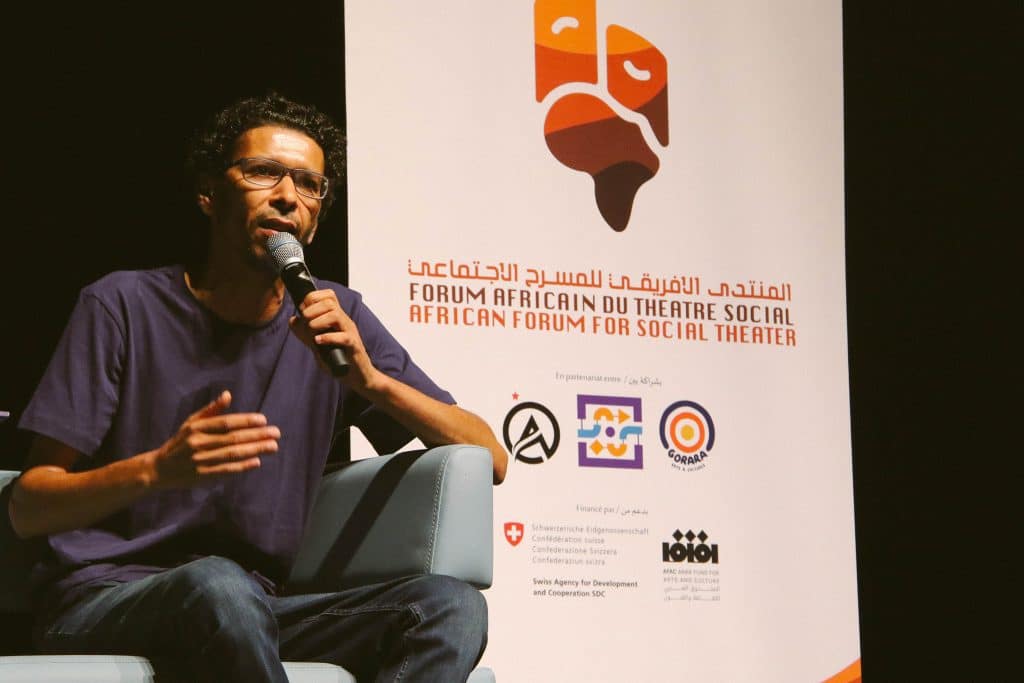
Maher Sherif *
Culture is a right for every citizen, guaranteed by the state and committed to supporting it and making cultural materials of all kinds available to all groups of people, without discrimination due to financial ability, geographical location, or otherwise.
Article (47)
Chapter Three – Chapter Two
From the Egyptian 2014 constitution
Introduction:
The word (culture) is one of the most complex words, and this term denotes a somewhat modern concept. The term (culture or civilization), according to what the anthropologist Edward Taylor saw in 1871, should be taken in its broad ethnographic sense, as it is – that is, culture – that complex whole that includes knowledge, beliefs, art, morals, law, customs, and other habits that a person acquires as a member of society (1).
Culture, according to the definition of UNESCO, is “all the spiritual, material, intellectual, and emotional features that characterize a particular society or social group, and it includes arts, literature, and life sects. It also includes basic human rights, value systems, traditions, and beliefs. Culture is what gives a person the ability to think about himself. And make him a being characterized by humanity represented by rationality, the ability to criticize, and moral commitment, and through it he is guided to values and exercises choice, and it is a means for man to express himself, to recognize himself as an incomplete project, to reconsider his achievements, to search for new meanings and to create works in which he excels on himself”.
Therefore, culture is what determines the development or backwardness of any society, and it is what preserves man socially, politically, and in existence. For this reason, states are keen to put in place what is called (cultural policies) or public parties and goals that the state and all actors in the field of culture adhere to in order to support and enhance the field. Cultural, cultural policy is the totality of plans, actions and practices. Cultural, which aims to meet the cultural needs of a country or a society, the totality of plans, actions and practices.
In the societies that are witnessing development and growth in the work of civil society, the setting and development of these cultural policies takes place in partnership between the civil society and the state, as the state is keen to open the way and provide the means for its civil institutions and individuals to work together on the development and implementation of these policies. its civil institutions.
(1) From the article (Cultural Culture and Poetics) – Stephen Greenblatt – translated by Moataz Salameh – Chapters – Volume (3/25) – Issue (99) Spring 2017 – p. 14
Cultural policies in Egypt:
Egypt has never adopted a clear cultural policy, and Egypt has been known to build what is called the modern civil state since the beginning of the nineteenth century AD with the advent of the era of Muhammad Ali Pasha, who wanted to build a modern state comparable to the European countries that he was fond of, especially France, so he approved sending educational missions to Europe, since then, the early intellectual renaissance began in Egypt, which was carried by its class
One of the intellectuals and sheikhs of Al-Azhar Al-Sharif, and the culmination of this was in the Egyptian Enlightenment Movement in the early twentieth century. At that time, it was the individual initiatives that carried what we can call the Egyptian cultural policy, and perhaps the most prominent of its pioneers was Dr. Taha Hussein, great thinkers such as Salama Musa and Shalaby Shmail, and enlightened sheikhs such as Imam Muhammad Abdo, but what Dr. Taha Hussein proposed was the most prominent, and he assumed the Ministry of Education in the government of Al-Nahhas Basha It is the ministry that we can say about that it is the ministry closest to the responsibility for the cultural situation of the country.
Egyptian constitutions and cultural politics:
The constitution is a set of basic legal rules that show the form of the state and its system of government and the extent of its authority vis-à-vis individuals and the rights of its citizens. In addition to setting a policy for it, we find that the 1923 constitution that was promulgated in April did not care at all about this issue. In its articles (169) (2), the word (cultural) was not mentioned or could revolve around this meaning.
As for the 1971 Constitution issued on September 11, 1971, consisting of 6 chapters and (193) articles, it is one of the most important constitutions issued after the July 1952 revolution and the most enduring Egyptian constitution, as it continued from its promulgation in 1971 until its abolition in 2012. Culture was not to occupy an important part of it, so we do not find Only two articles were mentioned to it, namely Article (16) which stipulates that “the state guarantees cultural, social and health services” (3)
and Article (49) which stipulates that “the state guarantees to citizens the freedom of scientific research and literary, artistic and cultural creativity” (4)
(2) The Egyptian Constitution 1923 and Parliamentary Rule in Egypt – Albert Choucair – Memory of the Book – The General Authority for Cultural Palaces 2012 p. 34 and beyond
(3) Constitution of the Arab Republic of Egypt – Library of Arts – 2010 – p. 16
(4) Previous source – p. 29
After the revolution of January 2011, two constitutions were issued, the first was issued in November 2012, in which the matter did not change much from the constitution of 1971, where culture was mentioned only in two articles only, and another article revolves around the meaning of culture, the first article is Article (12) which stipulates that (the state protects the cultural, civilized, and linguistic foundations of society) (5), and the second is Article (46), which stipulates that (freedom of creativity in all its forms is a right for every citizen.
The state takes the necessary measures to preserve the national cultural heritage and works to spread cultural services (6) and the last article that talked about culture is Article 213, which came under the title (The Supreme Authority for Heritage Preservation) and stipulated that (the Supreme Authority for Heritage Preservation means organizing means of protection The Egyptian urban and cultural heritage (7)
Thus, we find that things have not changed almost over (40) years that passed from the promulgation of the 1971 constitution to the 2012 constitution. The mention of (culture) came in almost the same terms and with the same meaning, which shows that the state was not taking into account what we call (cultural policies), and it was not concerned with culture except that it is a right within the general and abstract human rights.
Which seems strange to the two constitutions. The first came after the end of the sixties, bringing the winds of (alleged) freedom to Egypt. It came after the state adopted control over cultural matters as its policy, and a ministry concerned with culture appeared, which is the Ministry of Culture, which came as an extension of what the revolution called (the Ministry of Guidance). One of the most important men of culture in Egypt, Minister Tharwat Okasha, took charge of the Ministry of Culture in the sixties, who made a leap in government cultural performance and established the state (mass culture), which was concerned with delivering culture to the broad masses throughout Egypt.
In spite of this situation, which may seem glowing to the cultural situation in Egypt in the sixties of the last century, now the first Egyptian constitution issued after that did not completely mean laying any foundations for making a cultural policy, and this may explain that the ruling authority was not interested in culture except as one of the factors of its control over individuals,
(5) Constitution of the Arab Republic of Egypt – Shura Council Information Center – p. 7
(6) Previous source – p. 14
(7) Previous source – p. 58
and tried to assimilate the intellectuals within it, and to be its voice and its expressors and directers to the masses, and it was not to set a general policy for culture, but it was to set a policy to preserve the presence of power and its control over the masses, and therefore, as soon as the momentum of the beginnings ended in the sixties of the last century, the matter collapsed completely.
In the 1980s, another attempt emerged to create this false cultural radiance when Farouk Hosni became the Minister of Culture. He was one of the longest-serving ministers, staying in office for about 25 years until he was dismissed during the January 25 Revolution in 2011. Although the circumstances and factors surrounding the cultural reality had changed after approximately 20 years since the cultural boom in the 1960s, one of the most significant factors was the strong emergence of independent culture that believed the solution lies in movement away from state control. The first signs of that independent movement began in the 1970s with the emergence of what was called “Al-Masdir” magazines, which were literary/cultural magazines that appeared with very limited resources but expressed an alternative perspective. These perspectives may not have been predominantly against the state’s point of view, but they existed on the fringes of the state. This phenomenon led to a return to independent literary groups, youth cinema, and the movement of youth music bands. The civil society movement became an undeniable driving force, and this reality could have been a significant factor in shaping an official Egyptian cultural reality if it were not for the state’s reactivation using the same logic and mentality: controlling intellectuals and suppressing the independent movement. Therefore, Farouk Hosni’s experience in culture was a bitter one. On the surface, the man appeared to have made a “tremendous” growth in Egyptian cultural activity, but in depth, the trend was towards nationalizing culture and confronting the phenomenon of independent culture, which the state saw as the greatest threat. Instead of giving civil society a chance to work, attempts were made to control it through restrictive laws and security constraints. Farouk Hosni devised the theory of “the intellectuals’ barn,” which sees the necessity for intellectuals to work with, though, and for the state.
Indeed, that era came to an end with the January 25, 2011 revolution, leaving behind a bitter reality for Egyptian culture. There was a tremendous decline in the cultural level and a deterioration in the mechanisms of the state’s cultural apparatus. The state awarded directed prizes and organized massive festivals with little real impact. There was a widespread spread of extremism and terrorism, and new social phenomena emerged suddenly like contagious and widespread diseases, such as harassment and widespread cheating. The educational system also collapsed, lacking educational curricula even at the basic level. if the state had invested in the changing cultural climate and the rise of civil society, the Egyptian cultural situation could have been completely transformed during that period. It is strange that the 2012 constitution, which was drafted after the January 25 revolution, maintained the same mentality and official perspective towards culture. This constitution was formulated during the short-lived rule of the Muslim Brotherhood in Egypt and was a natural continuation of the lack of official interest in cultural policies. The question arises: Did the situation change with the issuance of the 2014 constitution?
The current situation in Egypt and the cultural status in the 2014 constitution:
The reader of the current constitution of 2014 in Egypt finds a “real” development in its approach to culture and education. The constitution addresses the issue of education and dedicates seven articles from Article 19 to Article 25 to it. One of the most important articles is Article 19, which states: “The state is committed to allocating a percentage of government expenditure for education that gradually increases and does not fall below 4% of the gross national product, in line with international rates.” This is the first time that a constitution explicitly stipulates the allocation of a percentage of the general budget for education, reflecting the project’s focus on the issue of education and its development. Despite the desire of intellectuals and their pressure to allocate a percentage (not less than 1.5% of the general budget) for culture, the 2013 constitution did not include such a provision. However, the cultural situation in the 2014 constitution differs from previous ones. The constitution divided the second chapter, titled “The Basic Foundations of Society,” into three sections: social foundations, economic foundations, and cultural foundations. For the first time in the history of Egyptian constitutions, a separate chapter was dedicated to culture under the title “Cultural Foundations” (2), which included four articles from Article 47 to Article 50. In addition, Article 67 guarantees “freedom of artistic and literary creativity” (3), and Article 75 states that “citizens have the right to form associations and civil institutions on a democratic basis” (4).
(1) The New Constitutional Document – Ministry of Youth – Page 10.
(2) In the constitution, this chapter (The Basic Foundations of Society) was divided into only two sections: social and ethical foundations and economic foundations. In the 2012 constitution, however, this chapter was divided into three sections: political foundations, social and ethical foundations, and economic foundations.
(3) Previous source, page 21.
(4) Previous source, page 22.
This is the first time that Egyptian constitutions address the freedom to establish civil associations and the importance of the existence of civil society. However, the effectiveness of constitutional provisions remains futile unless they are accompanied by respect and implementation of their principles. Therefore, whether this constitutional development is accompanied by a “new” reality in Egyptian cultural policies after the issuance of the 2014 constitution is yet to be seen.
Why is culture the solution?
There have been multiple conferences calling for attention to the future of culture in Egypt and its importance in societal movements, especially after the January 25, 2011 revolution and the drastic changes it brought to society and the belief in the possibility of change (1). The elite intellectuals of Egypt have unanimously agreed on the importance of culture as a solution to the problems facing Egyptian society. They believe that freedom of creativity is achieved through the independence of intellectuals from state authority and the independence of culture from all forms of oppressive societal and authoritative pressures. They argue that this freedom ensures the flourishing of thought and its ability to bring about positive change in society (2). Given that modern Egyptian history testifies that culture has led the way towards progress, the more influential and independent the cultural movement is from state control – to the extent possible – the more the state advances and prospers. For example, the cultural enlightenment period at the beginning of the 20th century, which coincided with the 1919 revolution, serves as an example. Conversely, whenever culture becomes complacent and distanced from society, embracing the authority, and intellectuals retreat from leading societal movements, the state lags behind and regresses. Examples of this include the defeat of 1967, marking the end of the dreams of the 1960s generation representing the state’s culture, and the drastic decline in Egyptian society during the Mubarak era, accompanied by his Minister of Culture, Farouk Hosny, which eventually led to the January 2011 revolution.
ـ Therefore, culture is the foremost indicator of societal progress or decline. If this is the creed we should follow, then we can only be true to it by ensuring its independence and strength.
(1) Among these conferences that presented important and influential recommendations is the conference “Independent Culture… for Democracy,” held on February 17, 2013, as well as the conference “Egypt’s Culture in Confrontation,” held on October 1-3, 2013.
(2) From the final statement of the conference “Egypt’s Culture in Confrontation”:
– In light of the various aspects of the current cultural problems in Egypt that we have discussed, we can add some general recommendations that we deem important in achieving the independence of the cultural movement and the growth of civil society institutions, thereby promoting the growth and prosperity of Egyptian society:
1. Scrutinizing Egyptian legislation related to cultural rights (such as the Law on Civil Associations, Law on Demonstrations, etc.) through inclusive societal dialogue that enables us to issue legislation that respects and does not hinder or control culture. (3)
2. Working vigorously to support the civil society sector and its institutions, individuals, while preserving its independence and ensuring its participation in shaping cultural policies in Egypt.
3. Developing new mechanisms that outline a clear cultural policy in which all influential cultural sectors in the country participate.
4. Restructuring the Ministry of Culture to enable it to become a supportive ministry for cultural production rather than exerting control over it.
5. Working towards supporting individuals’ freedom and ability to engage in cultural work, production, and access to it through all possible means, while utilizing the state’s resources to achieve this goal.
(3) Another example of legislation that infringes upon freedoms is the project prepared by Al-Azhar under the title “Combating Hatred and Violence in the Name of Religion,” which states that “it is not permissible to protest using freedom of opinion, expression, criticism, freedom of the press and media, or creativity in order to bring forth any statement or action that contradicts the provisions of this law!”
References
– The Egyptian Constitution of 1923 and Parliamentary Rule in Egypt – Albert Schachter – Dākhirat al-Katābah – General Authority for Cultural Palaces, 2012.
– Constitution of the Arab Republic of Egypt – Adab Library, 2010.
– Constitution of the Arab Republic of Egypt – Information Center of the Shura Council.
– The New Constitutional Document – Ministry of Youth.
– Conference Paper: “Independent Culture for Democracy” – Discussion session on the conference – Objectives, recommendations, and implementation mechanisms – 16th February 2013.
– Final Statement and Demands of the “Egypt’s Culture in Confrontation” Conference – 1st-3rd October 2013.
– Journal: “Fusul” – Volume 25/3 – Issue 99 – Spring 2017.
Culture is the solution.
This is the slogan raised by the (Raseen) Foundation at the General Conference on Culture, which organized multiple sessions.
*Maher Sharif
A writer, designer, bookmaker, researcher, theater artist, and multimedia artist.
Born in Alexandria in 1963. He holds a Bachelor of Laws degree from Alexandria University and worked as a lawyer for a long period. He devoted himself to writing and artistic work since the mid-1990s. He participated in editing and designing the three issues of the literary magazine “Khamaseen” in 1996, 1997, and 1998. He participated in discussions and management in the short story seminar at the Anfoushi Cultural Palace and the Asil Literary Group for many years. He designed covers for numerous literary books and cultural magazines, such as the three issues of “Mina” magazine and “Khamaseen” magazine, among others. He is the designer, executor, and ideator of the handmade series, from which dozens of issues have been published since 1996 until today. He participated as a trainer in the handmade book workshop at the Janna Summer Camp since 2010, and the workshop released a book titled “Janana” that includes works by camp trainees, and he has been participating in it annually since then. He has been involved for years in the independent theater movement in Alexandria as a writer, designer, executor of stage decor, and responsible for drama and scenography. He is the designer, executor, and owner of the project “Book of Everything.” He organized several exhibitions over the past years, including “My Heart is an Album Exhibition… 2012,” “Our Voice That We Love… Sometimes Exhibition 2014/2015,” “Searching for Europe Exhibition… Berlin 2013,” “Our Theatrical Memory Exhibition… 2015,” “Egypt Revolution Exhibition… 2011,” “Manchit Exhibition – Port Said – Cairo 2015,” and “Alternative Publishing Exhibition 2015.”
His publications include:
1. “Just Together” – 1999.
2. “The Lust Basement” – a continuous narrative – 2004.
3. [Title not provided] – 2004.
4. “Ya Hawadit Eman” – Ten texts in colloquial Arabic – 2004.
5. “A Tale and a Tale” – 2005.
6. Texts of Love – [Title not provided].